Master proper technique, discover key benefits and build a sustainable routine.
Getting started with rope skipping might feel awkward at first, especially if you have spent years on treadmills or cycling machines. The rope hits the floor, tangles around your ankles and you wonder if jumping rope could really deliver what every fitness coach claims. I have been coaching athletes and everyday folks for over twelve years and I can tell you that the initial frustration fades fast once you find your rhythm. Start by holding the rope handles close to your ribs, letting the ends reach your armpits. Jump on the balls of your feet with barely any height needed and keep your elbows tucked near your sides while you turn the rope with your wrists rather than your entire arms. This basic form prevents the fatigue that makes people quit in the first week.
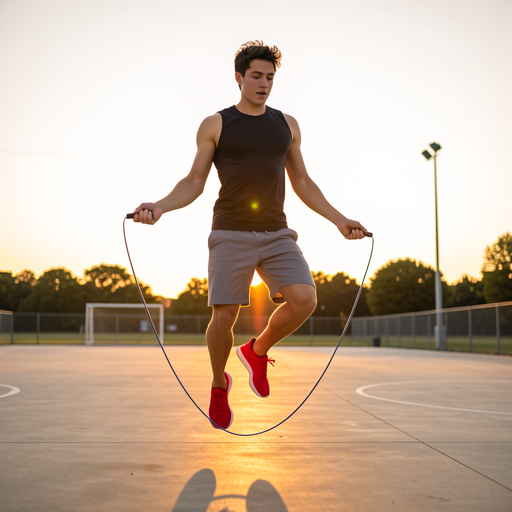
The real reason people stick with rope skipping comes down to how efficiently it taxes every system in the body. Just fifteen minutes of this exercise burns roughly the same calories as a half-hour jog, yet the impact on your joints stays significantly lower when you land correctly. Your calves, quads, glutes and core all fire simultaneously while your shoulders and forearms maintain steady tension from turning the rope. Heart rate climbs quickly into the training zone, which means cardiovascular improvements show up in far less time than traditional steady-state cardio. I watch clients who complain about hating running actually complete thirty-minute jump rope sessions without complaint because the constant variation in speed and style keeps their attention locked on the movement rather than the clock.
🌞
Beyond the obvious calorie burn, learning to skip rewires coordination in ways that improve everything else you do in the gym or on the field. Your footwork becomes lighter, your reaction time sharpens and the bilateral coordination required from crossing your arms and timing each jump builds neural pathways that transfer to sports like basketball, tennis and boxing. The mental focus cannot be faked either, because the moment your mind wanders the rope catches your feet and the session stops. This demands a level of concentration that doubles as a moving meditation, pushing daily stress out of your head while your body works at a pace that feels urgent but sustainable. Most people who commit to a daily skipping practice notice better sleep, improved mood and a confidence boost from mastering a skill that looks simple but rewards honest effort.
🌈
Building a sustainable routine does not require expensive gear or a gym membership. A basic weighted rope costs less than a single personal training session and lasts for years. Start with three sessions per week, mixing thirty seconds of fast jumps with thirty seconds of rest for ten minutes total. Gradually extend each session by two minutes per week until you are working for fifteen to twenty minutes straight. Keep a log of your time and note which days your form felt smooth versus choppy, because consistency matters far more than intensity during the first month. The people who see lasting results treat the rope like any other skill worth developing, showing up even on days when motivation is thin and watching their bodies adapt to a demand that once felt impossible.
🏊️